
Wild Hearts S: Unveiling the Nintendo Switch 2’s Power and Performance Ceiling







Popular Now
Sonic the Hedgehog™ Classic
 R.E.P.O
 Genshin Impact
 Rust
Rust
 PUBG Mobile
 EA SPORT FC 25
League of Legends
EA SPORT FC 25
League of Legends
 Counter-Strike 2
 Roblox
 BeamNG.drive
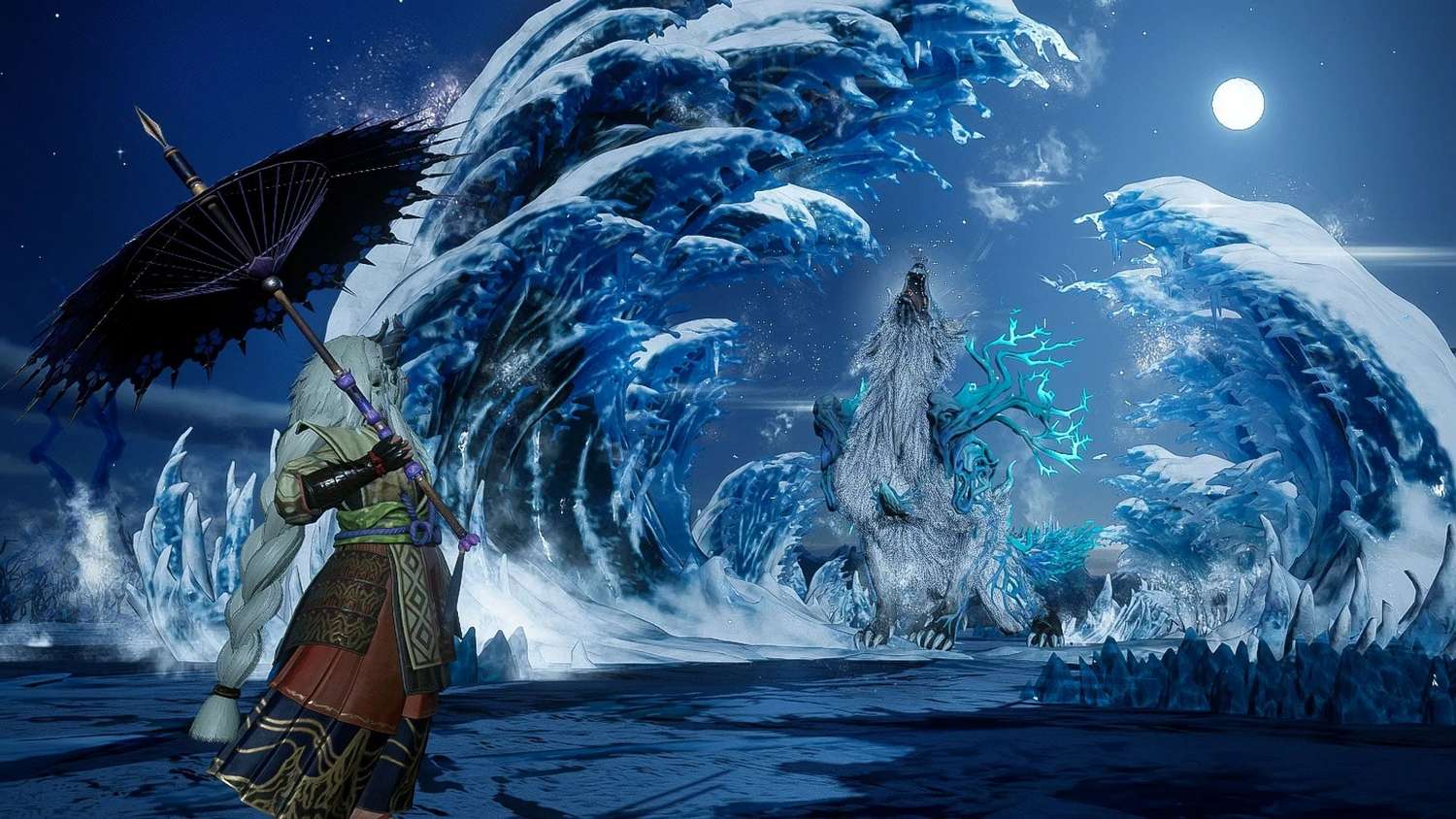 The gaming world buzzes with speculation and anticipation surrounding the hypothetical release of the Nintendo Switch 2. While official details remain under wraps, a title like Wild Hearts S, a prospective next-generation monster-hunting epic, serves as an ideal conceptual benchmark for what this new hardware could achieve – and where its inherent limitations might lie. As a high-fidelity, action-packed experience, Wild Hearts S, if realized on the Switch 2, would undoubtedly push the console to its absolute limits, offering critical insights into its graphical prowess, processing power, and overall gaming experience. This deep dive explores how such a demanding title could illuminate the Switch 2’s true potential and expose the compromises that portable console engineering still necessitates.
The current console generation has raised the bar for visual fidelity and gameplay sophistication. For Nintendo to compete effectively in the high-stakes gaming market, the Switch 2 must deliver significant upgrades while retaining the innovative portability that defines the brand. Analyzing Wild Hearts S, a game celebrated for its expansive environments, intricate monster designs, and dynamic combat, provides a crucial lens through which to evaluate these theoretical advancements. Gamers are increasingly demanding superior performance and immersive graphics, making the Switch 2’s debut a pivotal moment for Nintendo’s trajectory in the competitive video game landscape.
The Promise Fulfilled: Showcasing Switch 2’s Potential
Imagine Wild Hearts S running on the Nintendo Switch 2 with a level of fidelity previously unimaginable on a handheld device. This hypothetical scenario immediately highlights several key areas where the new console would excel, fulfilling long-held desires of Nintendo fans and attracting a broader demographic of gamers seeking premium experiences on the go.
- Enhanced Visual Fidelity: The most immediate and striking improvement would be in graphics. Wild Hearts S on Switch 2 could feature significantly higher resolution textures, more sophisticated lighting models, and vastly improved draw distances. The lush forests and sprawling landscapes of Azuma would appear more vibrant and detailed, with realistic shadows and reflections that add incredible depth to the environments. Particle effects during combat – explosions, elemental attacks, monster roars – would be rendered with stunning clarity, elevating the visual spectacle of every encounter. This leap in visual quality would be a strong selling point for the new hardware.
- Superior Performance and Frame Rates: A significant upgrade in CPU and GPU capabilities would translate directly into a smoother gameplay experience. Current Switch owners often contend with frame rate dips in graphically intensive titles. With Wild Hearts S, the Switch 2 could aim for a consistent 30 frames per second (fps) or even a dynamic 60 fps in less demanding scenarios, providing fluid combat and seamless exploration. This enhanced performance would make the frantic monster hunts more responsive and enjoyable, crucial for a genre that relies heavily on precise timing and quick reactions.
- Faster Loading Times: The integration of faster storage solutions, likely an NVMe SSD, would dramatically reduce loading screens between areas or after respawns. In a game like Wild Hearts S, which involves frequent transitions and hub-world interactions, quicker loading times would significantly improve player immersion and overall quality of life, minimizing frustration and maximizing playtime. This efficiency is a critical factor for modern gaming, where impatience for loading screens is high.
- Advanced Haptic Feedback and Audio: Beyond visuals, the Switch 2 could leverage improved haptic feedback in its Joy-Cons to create a more immersive tactile experience. Feeling the heavy thud of a monster’s footsteps or the distinct recoil of a weapon through nuanced vibrations would add another layer of sensory engagement. Paired with enhanced spatial audio capabilities, the roars of giant beasts and the environmental sounds of Azuma would envelop the player, deepening the sense of presence and danger.
These theoretical enhancements would position the Switch 2 as a truly next-generation portable console, capable of delivering experiences that challenge those on more powerful home systems, albeit within its unique form factor. The ability to play a visually rich and performant title like Wild Hearts S on a handheld device would redefine expectations for mobile gaming and attract a massive audience.
The Inherent Trade-offs: Recognizing Switch 2’s Limitations
While the prospect of Wild Hearts S on Switch 2 is exhilarating, it’s equally important to acknowledge the unavoidable compromises that come with designing a portable console. Even with significant hardware upgrades, the Switch 2 would still operate within certain thermal, power, and size constraints, which would manifest in identifiable limitations when running such a demanding title.
- Resolution Scaling and Visual Compromises: Despite improved graphical capabilities, native 4K resolution is likely beyond the Switch 2’s reach, especially in portable mode. Even docked, demanding titles like Wild Hearts S would probably rely on dynamic resolution scaling or upscaling technologies to maintain playable frame rates. This means that while textures would be sharper and lighting better, the absolute pixel clarity might not match that of a PlayStation 5 or Xbox Series X, leading to some visual softness or aliasing in complex scenes. Developers would need to make careful choices, potentially reducing environmental clutter or specific visual effects to maintain performance targets.
- Battery Life Implications: Pushing high-end graphics and processing power consumes significant energy. Running Wild Hearts S at its theoretical peak performance would likely result in substantially shorter battery life compared to less demanding titles or the original Switch. This trade-off between graphical fidelity and play duration is a critical consideration for a portable device and could impact gaming sessions on the go. Consumers would face a choice between visual quality and extended play without a power source.
- Thermal Management Challenges: Sustaining peak performance in a compact, fan-cooled chassis is a delicate balance. Running a game as graphically intensive as Wild Hearts S could lead to the console generating considerable heat. While robust cooling solutions would be implemented, prolonged intense gameplay might still result in thermal throttling, where the system reduces its clock speeds to prevent overheating, potentially leading to frame rate drops or reduced performance over extended play sessions. This is a common hurdle for all compact high-performance devices.
- Storage Requirements: Next-gen games with high-resolution assets typically demand large amounts of storage space. Wild Hearts S could easily exceed 50-70 GB, potentially filling up the Switch 2’s internal storage quickly, necessitating the purchase of additional high-speed microSD cards. This adds to the overall cost of ownership and could be an inconvenience for players with multiple large titles.
- Comparison to Home Consoles: Ultimately, the Switch 2, while powerful for a handheld, would still be a portable console. It will likely not match the raw horsepower of its dedicated home console counterparts. This means that multi-platform titles, even if optimized for the Switch 2, might still feature less detailed environments, fewer on-screen enemies, or slightly reduced visual effects compared to their PS5 or Xbox Series X versions. Understanding this comparative limitation is key to setting realistic consumer expectations.
These limitations are not failures of design but rather inherent compromises required to deliver a high-performance gaming experience in a portable form factor. The success of Wild Hearts S on Switch 2 would depend on how effectively developers manage these trade-offs to deliver a compelling experience that feels optimized for the platform, rather than merely ported.
Conclusion: A Defining Title for the Switch 2’s Era
The hypothetical launch of Wild Hearts S alongside the Nintendo Switch 2 would be nothing short of a watershed moment for portable gaming. This demanding, visually rich title would serve as a powerful demonstrator of the Switch 2’s enhanced capabilities – its improved graphical fidelity, smoother frame rates, faster loading, and more immersive haptics. These advancements would undoubtedly redefine what players expect from a handheld console, propelling Nintendo into a new era of competitive next-gen experiences.
However, Wild Hearts S would also starkly highlight the persistent challenges of portable hardware. The necessity for resolution scaling, the impact on battery life, the complexities of thermal management, and the occasional concessions compared to more powerful home consoles would underscore the unique design philosophy behind the Switch 2. It’s a device built for innovation and flexibility, not raw, unconstrained power.
Ultimately, Wild Hearts S on Switch 2 would embody a triumph of engineering and optimization, striking a delicate balance between pushing boundaries and respecting the constraints of its portable design. It would set realistic expectations for consumers while showcasing that Nintendo is committed to delivering compelling, high-quality gaming experiences, wherever players choose to game. This would firmly cement the Switch 2’s position as a potent and exciting force in the evolving landscape of interactive entertainment, offering a blend of performance and portability that remains unmatched.